SPECIALIZED CARE FOR
Heart RhythmDisorders
Advanced diagnosis and modern treatments
for a healthier, safer and more active life.
- Accurate
Diagnosis - Modern
Technology - Personalized
Treatment - International
Patient Care
Heart Rhythm Disorders
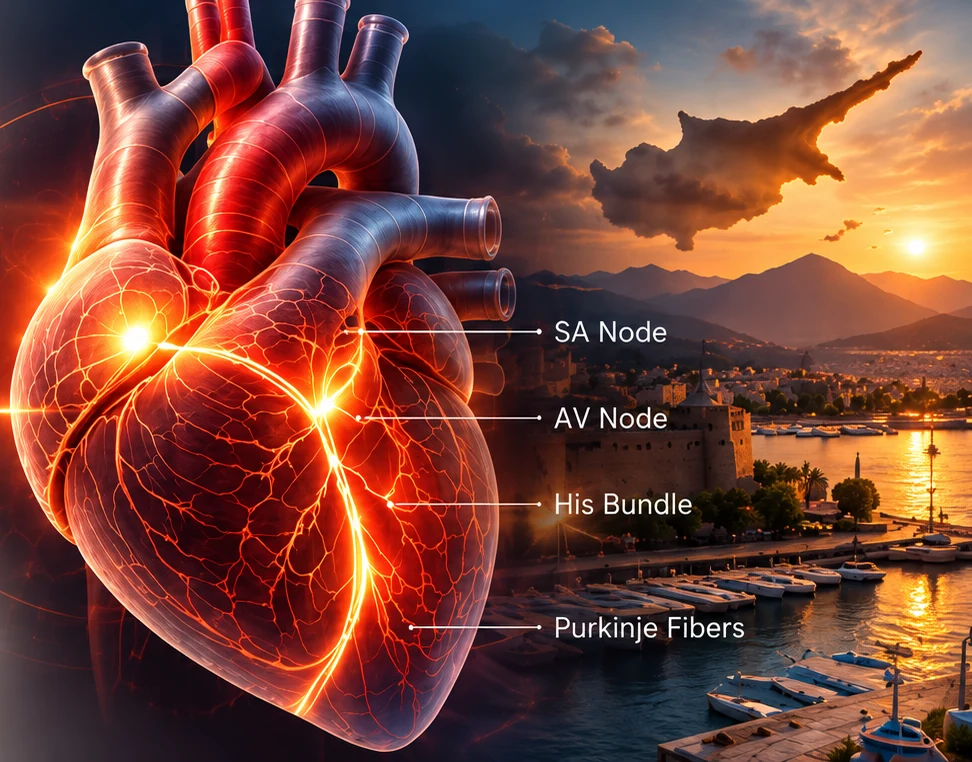
The heart’s electrical system, understood in detail.
Rhythm disorders arise when electrical signals start in the wrong place, follow the wrong path, or run too fast, too slow or irregularly. Cyprus Arrhythmia is dedicated to finding the mechanism and treating it with precision.
All heart rhythm disordersRhythm disorders we focus on
Diagnostics
Capturing the rhythm wherever it hides
Many arrhythmias come and go. Diagnosis begins by matching the right recording method to the pattern of your symptoms, and moves inside the heart only when it is needed.
All diagnosticsEPS
Electrophysiology Study
Catheters placed in the heart record electrical signals from the inside, so the mechanism of an arrhythmia can be studied directly and, when appropriate, treated in the same session.
Electrophysiology Study3D
3D Electroanatomical Mapping
Signals recorded from the heart are built into a three-dimensional model that shows where a rhythm begins and how it travels, guiding precise treatment.
3D Electroanatomical MappingCatheter ablation technologies
One approach, different energy sources
Catheter ablation treats the small area of heart tissue that sustains an arrhythmia, without open-heart surgery. The energy source is chosen for the rhythm disorder, the anatomy and the patient.
Catheter AblationRadiofrequency Ablation
Radiofrequency energy delivered through the catheter tip, used across a broad range of rhythm disorders.
Read more →Cryoablation
Cold energy that may be selected in particular anatomical or clinical situations.
Read more →Pulsed Field Ablation
Short pulses of electrical field energy, with selection depending on the rhythm and anatomy.
Read more →No single technology suits every patient. Your electrophysiologist will explain which approach fits your case.
Targeted treatment
From rhythm diagnosis to targeted treatment
Treatment follows the diagnosis. Some arrhythmias need observation or medication, others are treated by ablation, and a few need a device.
Record
ECG and rhythm monitoring document the arrhythmia.
Map
Electrophysiology study and 3D mapping locate the mechanism.
Select
The approach is chosen for the rhythm and the individual.
Treat and follow
Treatment is delivered and followed up over time.
Disease-specific ablation
Atrial Fibrillation AblationAtrial Flutter AblationSVT AblationPVC AblationVT AblationDevices and other treatments
Electrical CardioversionPacemakerICDLeft Atrial Appendage ClosureLeft atrial appendage closure is a stroke-prevention device procedure, not an ablation.
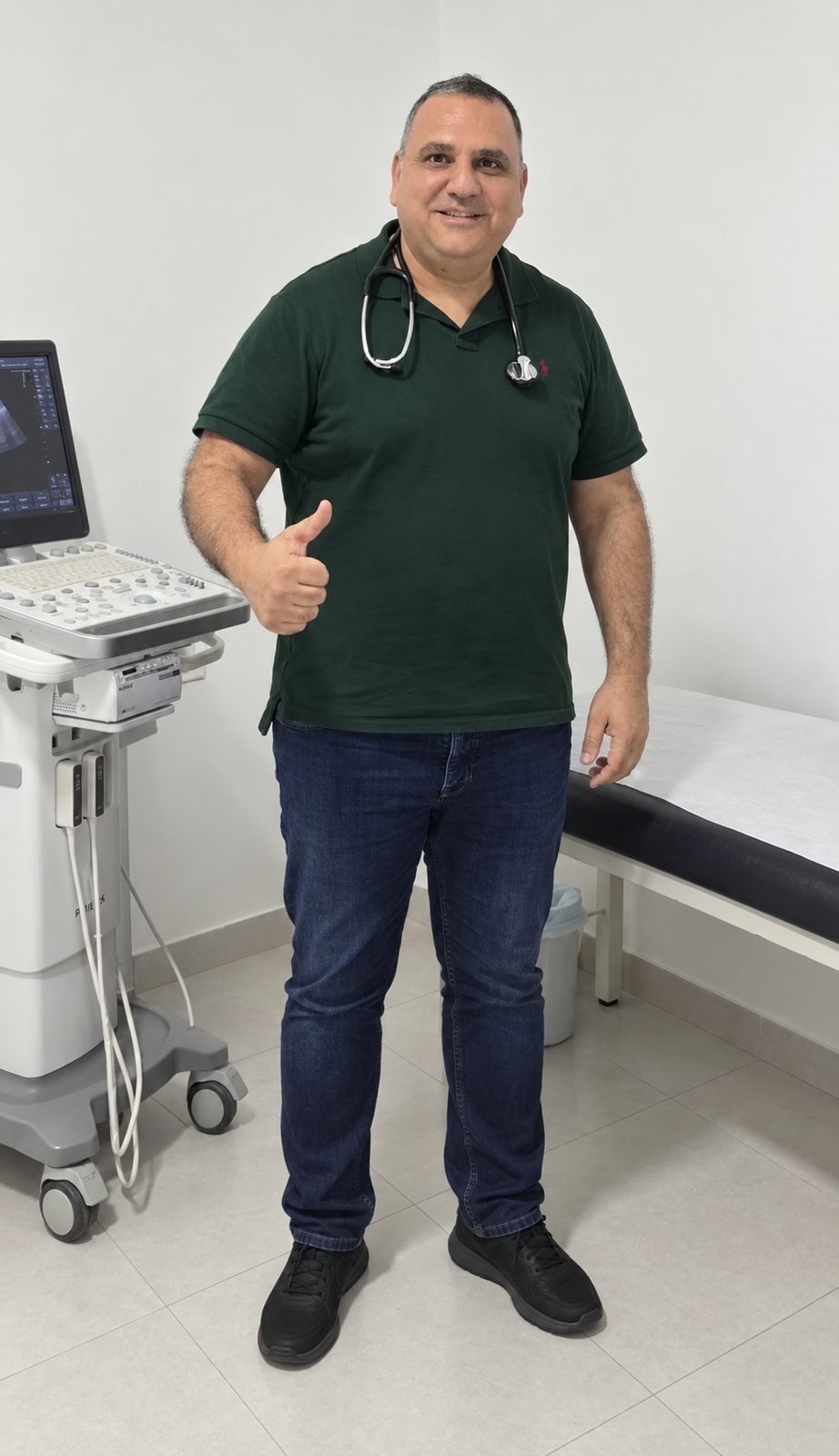
Our doctor
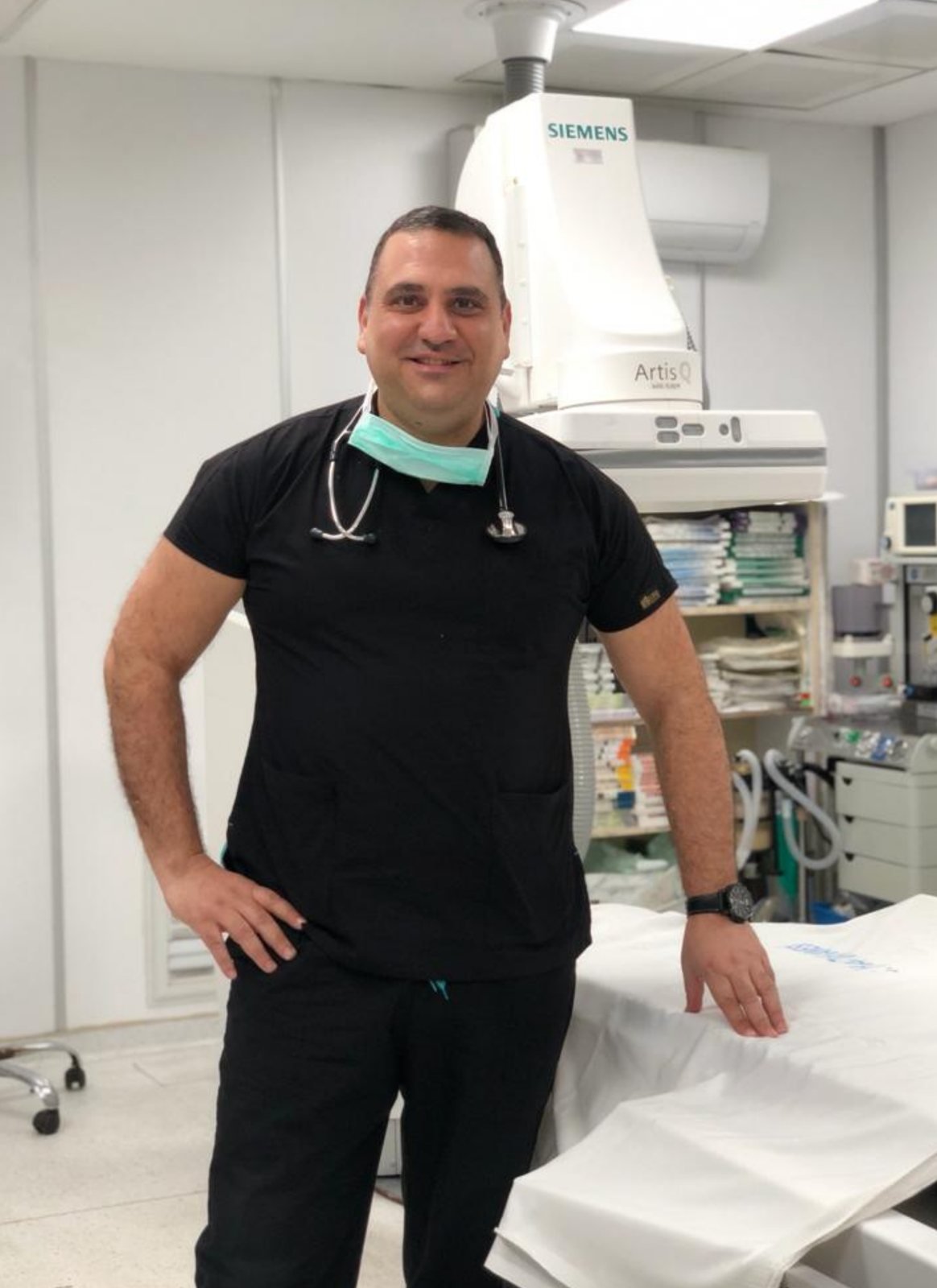
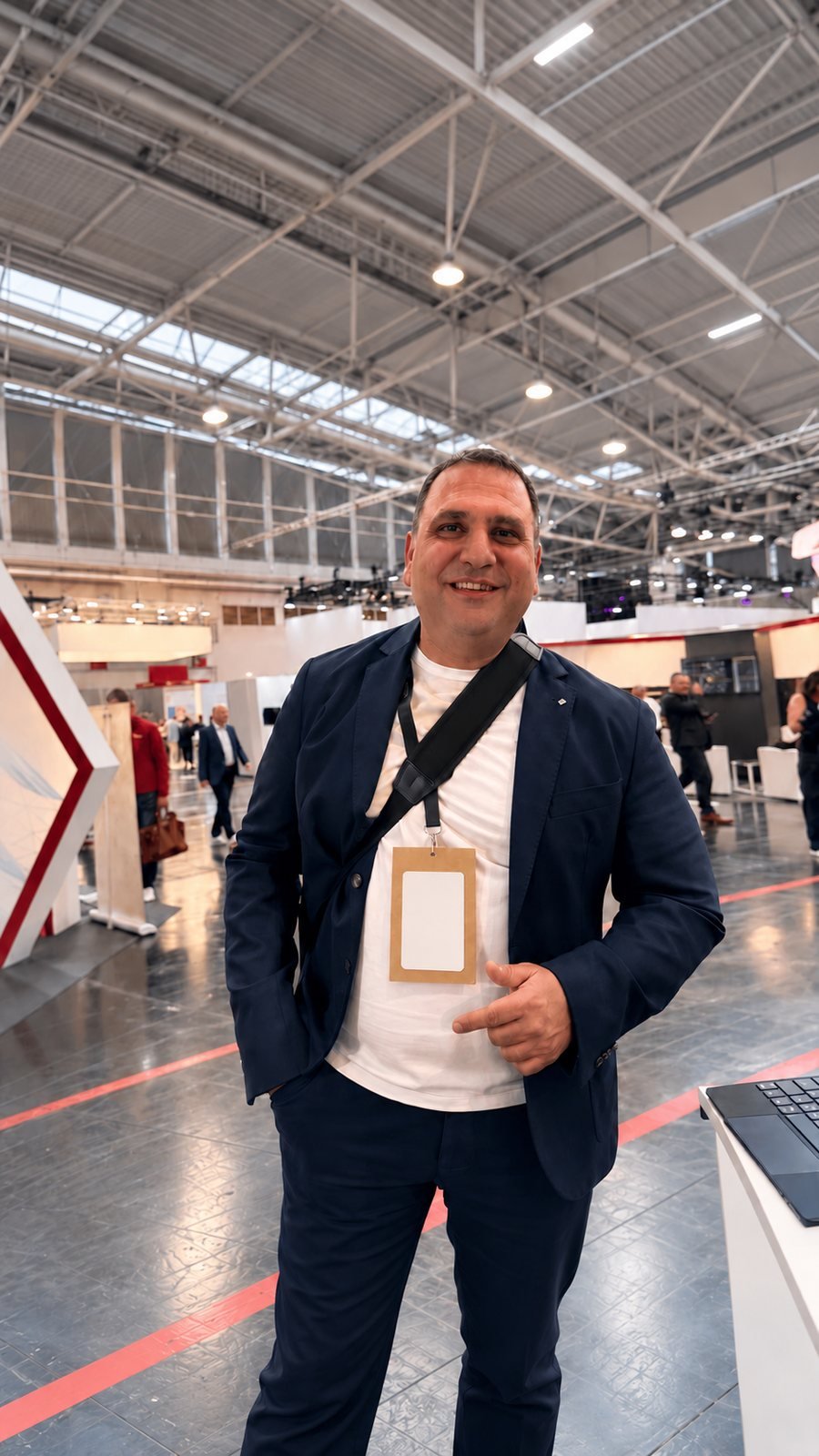
Prof. Dr. Osman Beton
Prof. Dr. Osman Beton works in cardiology and cardiac electrophysiology, with a focus on diagnosing and treating heart rhythm disorders, including catheter ablation guided by 3D electroanatomical mapping.
- Cardiology
- Cardiac Electrophysiology
- Heart Rhythm Disorders
- Catheter Ablation
- 3D Electroanatomical Mapping
Patient information
Everything you need before and after your visit
Practical guidance on preparing for your appointment or procedure, recovering afterwards, and travelling to Cyprus.
All patient informationQuestions
Frequently asked questions
Do all heart rhythm disorders need treatment?
No. Some need only explanation and follow-up. The recommendation depends on the rhythm, your symptoms and your heart.
Is catheter ablation open-heart surgery?
No. Thin catheters are guided to the heart through blood vessels, usually from the groin.
Can I be assessed if I live abroad?
Yes. See Traveling to Cyprus and Before Your Visit for how to prepare.
What should I bring to the first appointment?
Previous ECGs, reports and a list of your medicines are useful. Details are on the Before Your Visit page.
Contact
Speak with our team
To arrange an appointment or ask about your situation, call or message us on WhatsApp.
+90 392 224 00 40WhatsApp: 0533 855 08 33